Rekt on Gensyn, or how to break decentralized AI momentum
After us, only dust will remain. Yesterday, hundreds of contributors to decentralized AI said the scariest thing for this space – I will never take part in something like this again.
How did it come to this? How did one of the largest AI projects kill the most important layer of contributors – people who were ready to spend their time and a significant amount of money to support the network?
Over the last 8 months, I brought dozens of people into @Gensynai, wrote the first installation guide just 3 hours after the testnet launch and kept updating it, while personally helping community members set up their nodes.
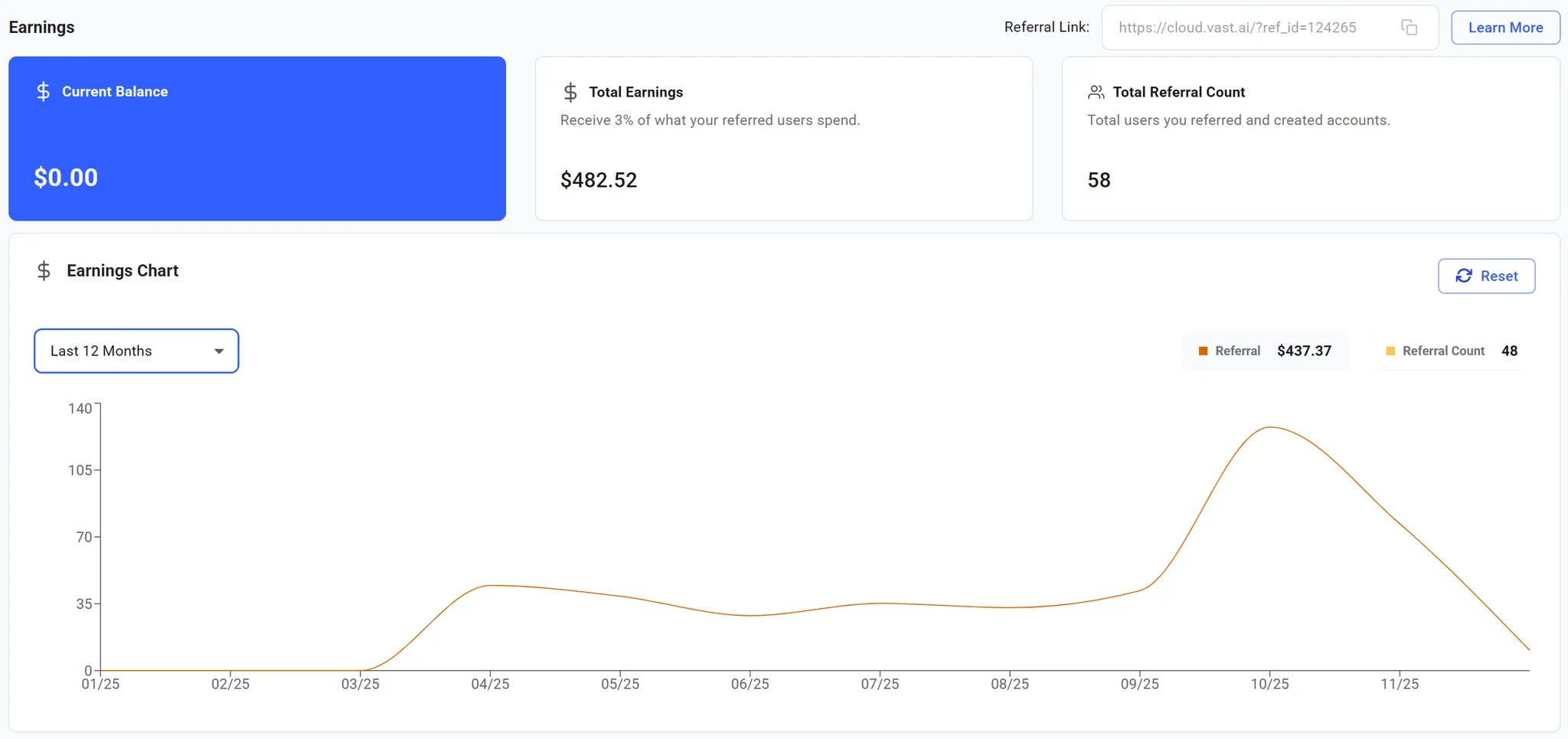
I feel a certain responsibility toward the people I invited, because my referrals on Vast spent over $14,000 supporting the Gensyn network.
It seems like it should be simple. You spend a serious amount of money supporting the network by renting expensive GPU servers, and in return you get project tokens and valuable experience.
In the case of Gensyn, the experience really was valuable. The reimbursement of costs, however, was not.
The biggest problems hit those who genuinely tried to do things properly and bring real value to the project.
So what was Gensyn core problem?
- The team did not limit the community to GPUs, encouraging installations on weak CPU VPS instead. This was done in pursuit of cheap noise – the more participants, the more people talk about the project.
- The testnet spiraled out of control. From the start, the team failed to define clear metrics to measure individual contribution. Some thought participation points mattered most, others believed reward points were the key.
- Community contribution was measured by Discord chat activity and the number of drawn artworks. Real contributors – those who brought hundreds of users, wrote guides, and helped maintain nodes – were left behind.
- The team was unable to allocate enough tokens to cover the community’s actual costs, assigning only 1.6% for the airdrop. This field is extremely expensive. Participants rented costly GPUs. Personally, I ran nodes on 3090s and 4090s for the first few months and only switched to cheaper 8–16 GB cards in summer. Some rented H100s and suffered massive losses.
- Once again, the testnet was out of control. To be precise, there was no real control from the beginning.
By the most conservative estimates, the community spent over $10 million on hardware rentals. This is the bare minimum – I even divided the number by two in case most of the 160000 participants were bad actors.
Those who rented GPUs to support the network got rekt.
What did I personally get from the testnet?
- Spent over $2,700 on server rentals.
- Received 42,046 tokens.
My effective token price ended up higher than the final auction price. Essentially, I bought tokens at an FDV of $608 million, while the auction valuation was $473 million.
My $2,700 does not include dozens of hours spent maintaining and updating nodes, or participating in BlockAssist and CodeAssist side activities. It also does not include the many hours spent writing guides and providing community support.
In other words, honest contributors are deeply screwed, right?
Could the Gensyn team have done better? Of course.
- Exclude CPU nodes, or at least separate them from GPU nodes and give them far less weight in reward calculations. A 1 to 10 ratio would have been fair.
- Limit the number of testnet participants if you are not ready to allocate sufficient rewards. Use whitelists, like other projects do.
- Allocate a much larger percentage of supply for rewards. 4–5% would have significantly softened the situation.
- Define key reward metrics from day one. Do not confuse participants who spend $300 per month just to take part.
What’s next?
Overall, I am still bullish on decentralized AI. I had an amazing experience working with the @heurist_ai – shoutout to the founder Jay @artoriatech. I have never seen a more open and fair attitude toward the community.
In 2026, I am expecting the public testnet of @FortyTwo. During the current DevNet phase, I earned around 5 million tokens. At the moment, I have shut down all servers – I need a short reset after Gensyn.
@NousResearch and @Pluralis also look very interesting. These are two highly talented AI research teams that have already demonstrated real progress in distributed training of large-scale ai models.
In the end, my recommendation to the community is to follow real researchers and visionaries. If developers cannot fix basic bugs in their own code and rely on the community to do it, such projects are probably best avoided.
Gensyn problem was overhype. Bad actors joined the project and abused the system by running nodes on cheap CPU servers that provided no real value to the network.
The team was fine with this because it helped generate noise around the project, even at the cost of sacrificing real contributors who supported the network from day one using expensive hardware.
As a result, those who put in the least effort received the largest share of the reward allocation.
Advice to project teams: stay closer to your community. Do not hide behind walls of moderators. Try to identify real contributors, connect with them directly, and you will gain far more value.
As much as I like FortyTwo, I have never once seen the founders in Discord. Valuable roles are given to those who chat in Discord, not to those who bring real value by onboarding new users and growing the project.
I do not think this is the right approach. I hope it will be fixed next year.
AI x crypto is a great mix, but not when this path is chosen purely for extraction and free compute.
Love your core community and find a way to highlight them. Not yappers, not Kaito farmers, not Smash Karts Discord players – but community leaders, enthusiasts, developers, and genuinely passionate users who support the project with actions, not noise.